How to Soundproof a Home Office for Better Call Quality
Two completely different complaints get lumped together under “my home office needs soundproofing”: sounding bad to other people on calls, and being distracted by outside noise during calls or focused work. They have different causes and different fixes, so the first step is figuring out which one (or both) you actually have.
Problem 1: You sound echoey or hollow on calls
This is almost always a room acoustics problem, not a microphone problem. See our detailed explainer on acoustic treatment vs. soundproofing if you want the full mechanism. The fix is absorption, not blocking.
Budget fix ($0-40):
- Add soft surfaces: a rug if you have hard flooring, curtains if you have bare windows, a fabric-covered chair or couch in the room.
- Sit facing a wall with some furniture or soft material behind you rather than a bare wall; this cuts the reflection path directly behind your voice.
Moderate fix ($60-150):
- 4-6 acoustic foam panels (look for NRC 0.7+) placed at “first reflection points”: the spots on the side walls and ceiling where sound from your mouth would bounce directly back to your microphone. A simple way to find them: have someone slide a mirror along the wall while you sit in your normal position; wherever you can see your microphone/camera in the mirror is a first reflection point.
- A portable acoustic panel or gobo behind your monitor/camera setup if you’re in an otherwise-untreatable rented space.
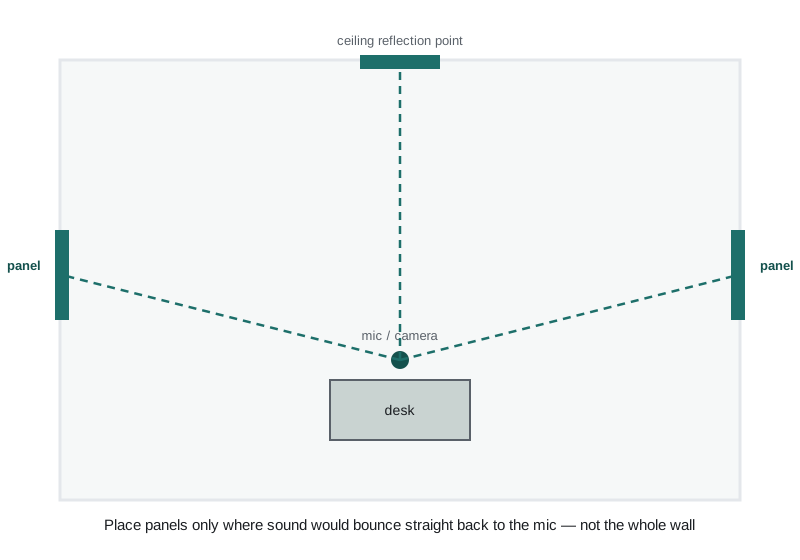
Full fix ($150-400):
- Full-wall panel coverage on the two walls beside you and behind your camera position
- A rug plus panels plus a acoustic ceiling cloud if your ceiling is a major reflective surface (common in rooms with vaulted or hard ceilings)
Problem 2: Outside noise interrupts your calls or focus
This is a transmission problem (sound entering the room from outside) and needs soundproofing approaches, not foam panels. See our apartment wall guide for the underlying techniques; the same principles apply to a home office.
Priority order:
- Seal the door: a hollow-core door with a gap underneath is often the single biggest noise leak into a home office. A door sweep and weatherstripping ($20-35) frequently makes a bigger difference than any wall treatment.
- Seal window gaps if the office has an exterior-facing window; weatherstripping tape is cheap and fast.
- If the noise source is a specific wall (shared with a noisy household area, or facing a street), add mass to that wall specifically rather than treating the whole room evenly.
- Consider a white noise machine or app as a background layer. It doesn’t reduce the actual noise, but it masks intermittent noises (a door slamming, a dog barking) that are more distracting than they are loud.
A note on “how much do I actually need”
If your home office use case is a handful of calls per week, the budget-tier fixes for both problems (soft furnishings, a door sweep, decent mic placement) usually get you to “good enough that people stop commenting on your audio.” Full acoustic treatment is worth it if you’re recording professionally or on calls for a living; otherwise you’re likely to hit diminishing returns past the moderate tier.
Frequently Asked Questions
Why do I sound echoey on video calls even with a good microphone?
A good microphone captures room reflections just as clearly as your voice. If your room has hard, parallel surfaces (bare walls, hard floors, big windows), sound bounces around and the mic picks up both your direct voice and the reflections, which sounds like echo or a 'hollow' quality to people on the other end. This is a room acoustics problem, not a hardware problem.
Do I need soundproofing or acoustic treatment for a home office?
Usually both, but for different symptoms. Acoustic treatment fixes how you sound to others (echo, hollowness). Soundproofing addresses outside noise interrupting your calls (traffic, household noise, neighbors). See our full breakdown of the difference.